Lintels are steel supports installed above windows, doors, and garage openings in brick homes. They carry the weight of the masonry above these openings. Over time, moisture exposure can cause steel lintels to corrode, expand, and fail—leading to cracked brick, water intrusion, and structural damage.
Brickheads Masonry provides professional residential lintel repair and lintel replacement services designed to restore structural integrity and prevent future masonry failure.
Signs Your Residential Lintels Are Failing
Homeowners often notice the following warning signs:
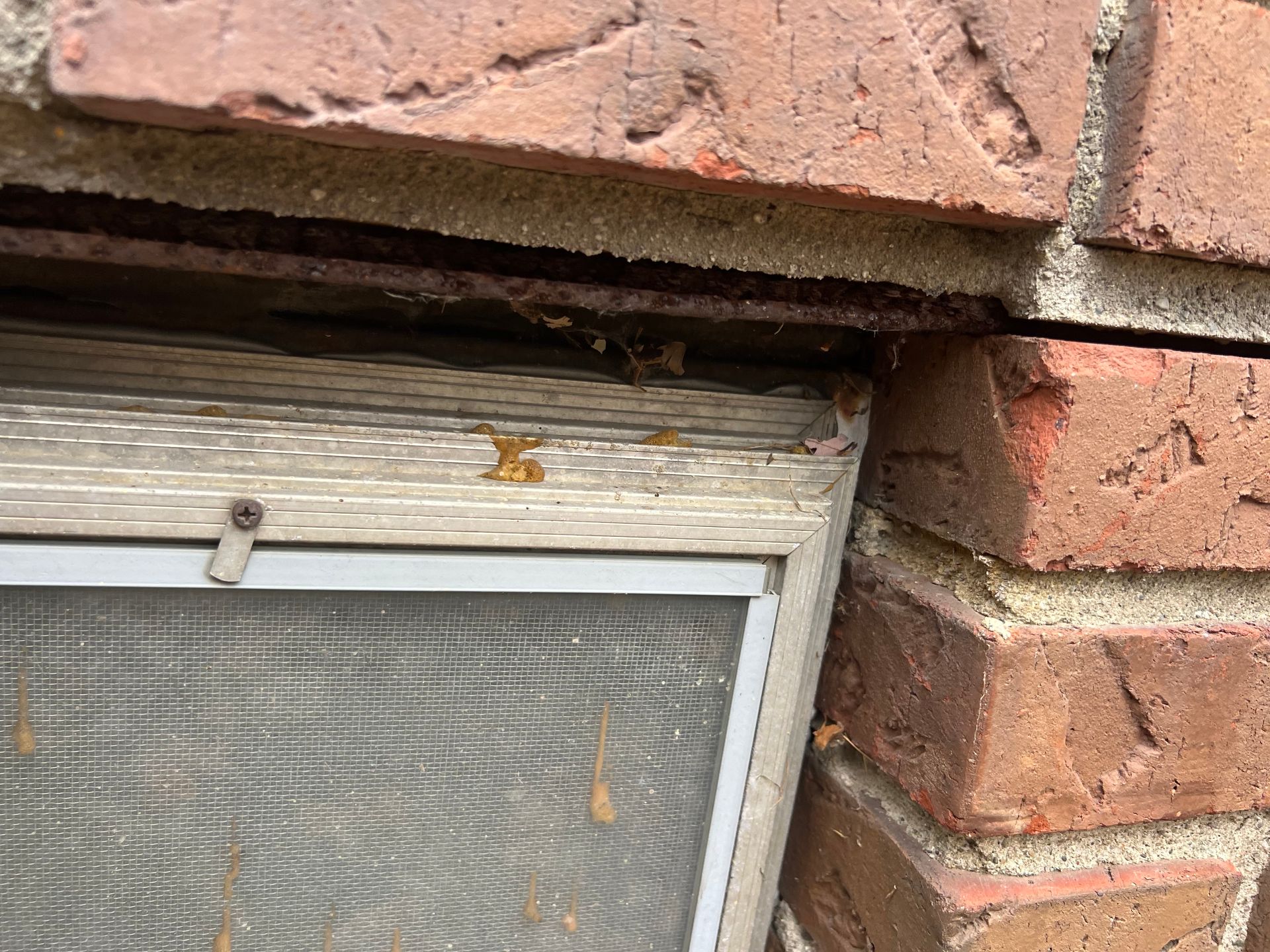
- Cracked or stair-step cracking in brick above windows or doors
- Rust stains bleeding through brick or mortar joints
- Sagging or bowed brick courses
- Gaps between brick and window or door frames
- Doors or windows sticking or becoming misaligned
- Loose or shifting bricks above openings
If these symptoms are present, the lintel is no longer properly supporting the masonry.
What Happens If Residential Lintel Damage Is Ignored
- Progressive brick and mortar failure
- Water intrusion behind the brick veneer
- Accelerated corrosion of steel components
- Damage to windows, doors, and interior finishes
- Increased repair costs due to expanded structural damage
Early lintel replacement helps avoid costly structural repairs later.
Our Residential Lintel Replacement Process
All residential lintel replacements are completed to current building codes and best masonry practices.
- Carefully remove brick above the opening
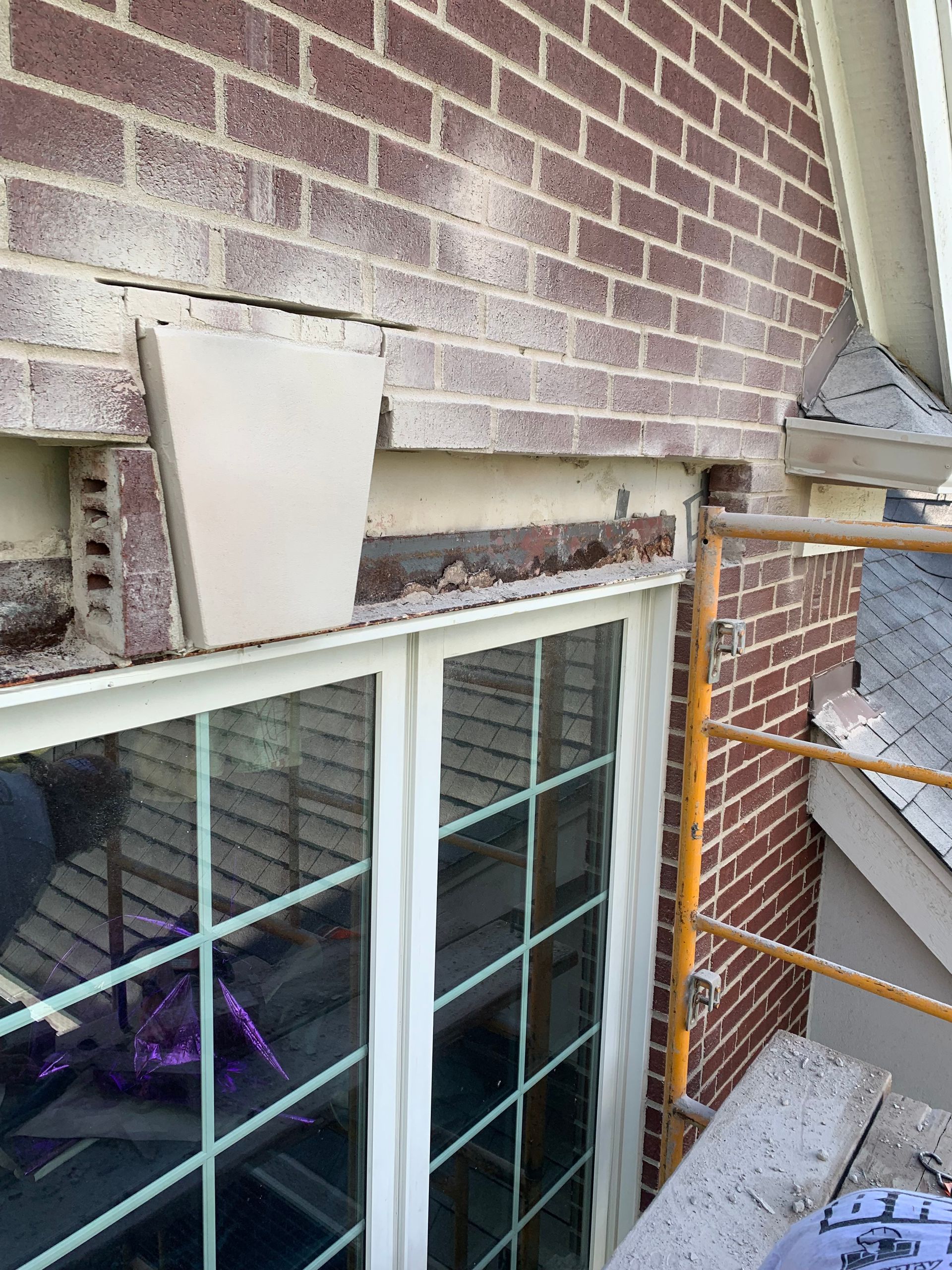
- Remove the failed steel lintel
- Install a properly sized, corrosion-resistant lintel
- Install through-wall flashing and moisture barriers
- Add weep vents or weep breathers for drainage
- Rebuild brickwork to match existing masonry
Residential Lintel Repair & Replacement FAQs
What is a masonry lintel?
A lintel is a steel or masonry support installed above doors and windows to carry the load of brickwork above.
What are signs a lintel is failing?
Cracked brick above openings, rust stains, sagging brickwork, and sticking doors or windows are common signs.
What causes lintel failure?
Moisture exposure, rusting steel, and age are the primary causes of lintel deterioration.
Is lintel repair structural?
Yes. Failing lintels compromise the structural integrity of the surrounding masonry.
Can damaged lintels be repaired or must they be replaced?
Minor corrosion may be repaired, but severe rust or structural damage usually requires replacement.
How long does lintel repair or replacement take?
Most residential lintel projects are completed within 1–2 days.
Why Choose Brickheads Masonry
- Residential and commercial masonry specialists
- Code-compliant lintel replacement
- Proper flashing and drainage systems
- Long-term solutions—not temporary fixes
- Clean, professional workmanship
Special Discounts for BERKLEY Residents
Take advantage of our exclusive offers for your next project:
30% OFF ALL MASONRY PROJECTS*
20% OFF ALL PAVER PROJECTS*
10% OFF ALL CONCRETE PROJECTS*
*When hired at initial appt. Minimum purchase required. Maximum Discount applies. Not valid with other offers.
Lintel repair & replacement Experts in:
- Armada
- Almont
- Auburn Hills
- Bruce Township
- Bloomfield Township
- Bloomfield Hills
- Birmingham
- Berkley
- Beverly Hills
- Bingham Farms
- Clawson
- Centerline
- Clarkston
- Clinton Township
- Chesterfield
- Commerce Township.
- Detroit Palmer Woods
- Detroit Sherwood Forest
- Detroit University District
- Detroit Indian Village
- Detroit Midtown
- Detroit Corktown
- Detroit Boston Edison
- Detroit Woodbridge
- Detroit Palmer Park
- Eastpointe
- Fraser
- Farmington
- Farmington Hills
- Franklin
- Ferndale
- Harrison Township
- Huntington Woods
- Hazel Park
- Keego Harbor
- Lake Orion
- Lake Angelus
- Lathrop Village
- Leonard
- Macomb
- Madison Heights
- New Baltimore
- Oxford
- Ortonville
- Orchard Lake
- Oakland Township
- Oak Park
- Pleasant Ridge
- Pontiac
- Richmond
- Romeo
- Rochester
- Rochester Hills
- Royal Oak
- Roseville
- Shelby Township
- Saint Clair Shores
- Sterling Heights
- Sylvan Lake
- Southfield
- Troy
- Utica
- Washington Township
- White Lake
- West Bloomfield
- Waterford
- Warren
Call Us Today
Need more information? Call us at 586-709-2365 to speak with one of our experts.